

10 Small Bedroom Ideas to Make Your Space Feel Bigger and Cozier
A small bedroom can feel challenging to decorate, especially when your bed, storage, and everyday essentials already take up most of the available space. But a limited footprint doesn’t mean you have to sacrifice comfort or style.
The best small bedroom ideas focus on changing how the room feels rather than trying to make it physically bigger. Light colors, appropriately scaled furniture, mirrors, vertical storage, and intentional decor can create more visual breathing room while keeping the bedroom warm and inviting.
Whether you’re decorating a compact apartment bedroom, a guest room, or a small primary bedroom, these simple ideas can help you make the most of every inch.
1. Make the Room Feel Airier With Light Colors
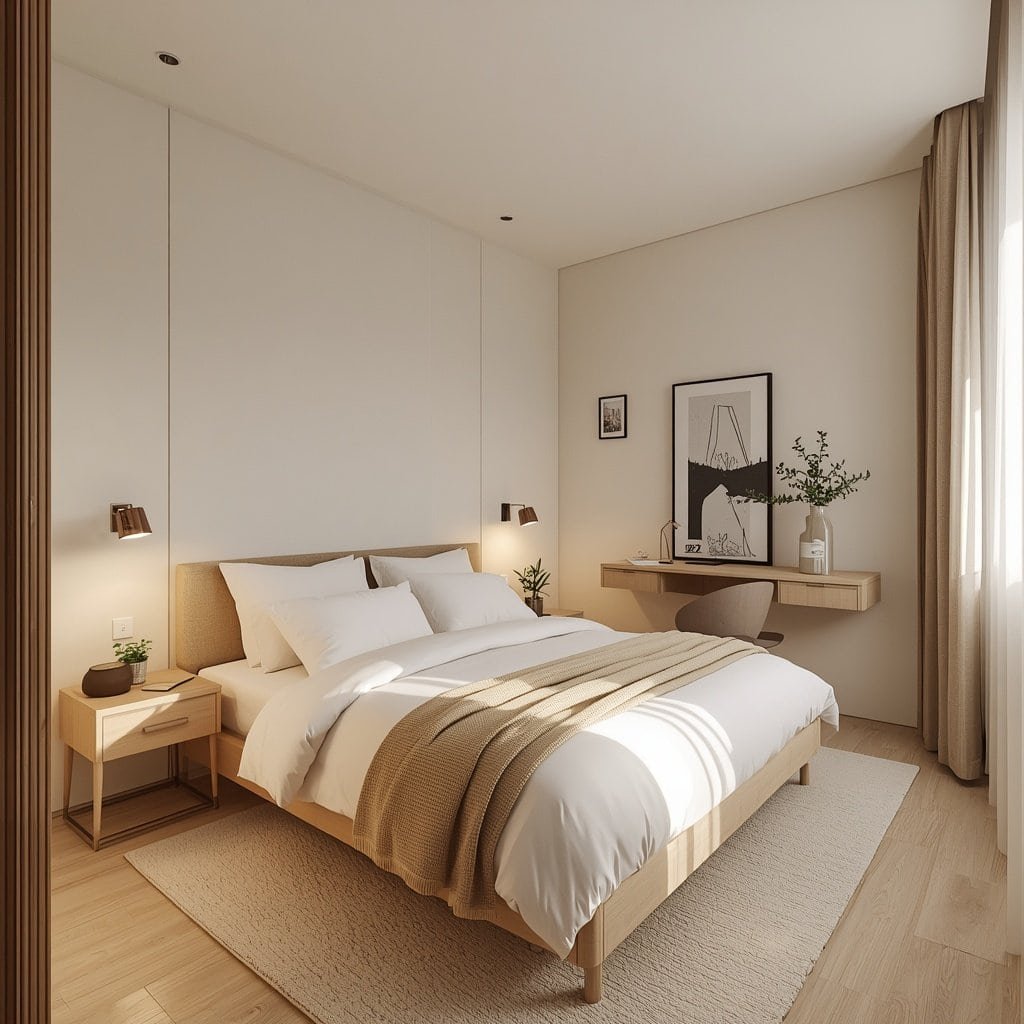
Light colors can help a small bedroom feel brighter and more open by creating a softer visual transition between surfaces. You don’t have to make everything stark white, either. Warm whites, creams, soft beige, and muted pastels can create a spacious feeling while still keeping the room cozy.
Choose Soft Whites and Warm Neutrals
A warm neutral palette is especially useful when you want your bedroom to feel both spacious and comfortable. Cream, ivory, oatmeal, and light taupe can work beautifully on walls, bedding, curtains, and larger furniture pieces.
Instead of introducing several unrelated colors, choose two or three closely related shades and repeat them throughout the room. This creates a more cohesive look and prevents individual pieces from visually competing for attention.
Create Contrast Without Making the Room Feel Heavy
A small bedroom doesn’t have to be completely monochromatic. Add contrast through small details such as a darker bedside lamp, natural wood frame, textured throw, or a muted accent pillow.
The key is to keep stronger colors limited to smaller areas. This gives the room personality without creating too many visual stopping points.
Keep the Ceiling Visually Light
A light ceiling can help maintain an open feeling, particularly when the walls are also painted in a similar soft tone.
For an even more seamless look, consider keeping the trim and ceiling within the same general color family as the walls. A cohesive transition allows the eye to move around the room without being interrupted by strong boundaries.
2. Choose Furniture That Fits Your Space
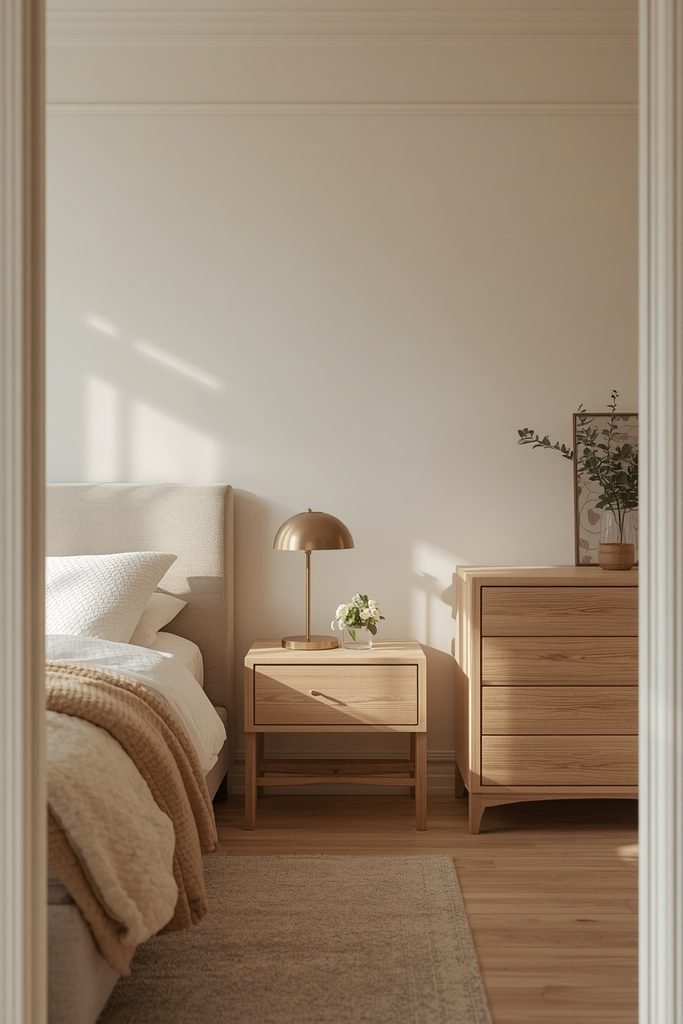
Oversized furniture can quickly make a small bedroom feel cramped. Before buying anything, consider both the physical dimensions and the visual weight of each piece.
Avoid Oversized Bedroom Furniture
A large bed frame, deep dresser, and bulky nightstands can consume valuable floor space even when they technically fit.
Choose furniture that leaves enough room to walk comfortably around the bed. A slimmer headboard, narrow nightstand, or compact dresser can make a surprising difference.
The goal isn’t to fill every available corner. Leaving some breathing room around furniture can make the entire bedroom feel more spacious.
Prioritize Pieces With Multiple Functions
In a small bedroom, furniture that performs more than one job can be especially useful.
A bed with built-in drawers can provide additional storage, while a small bench with hidden storage can offer both seating and a place to keep blankets. A floating shelf can also replace a larger bedside table when floor space is limited.
Leave Enough Visual Breathing Room
Furniture with exposed legs can sometimes make a room feel lighter because more of the floor remains visible.
You don’t need every piece to float, but combining a few visually lighter furniture pieces with an uncluttered floor can help the bedroom feel less crowded.
3. Make the Most of Vertical Space
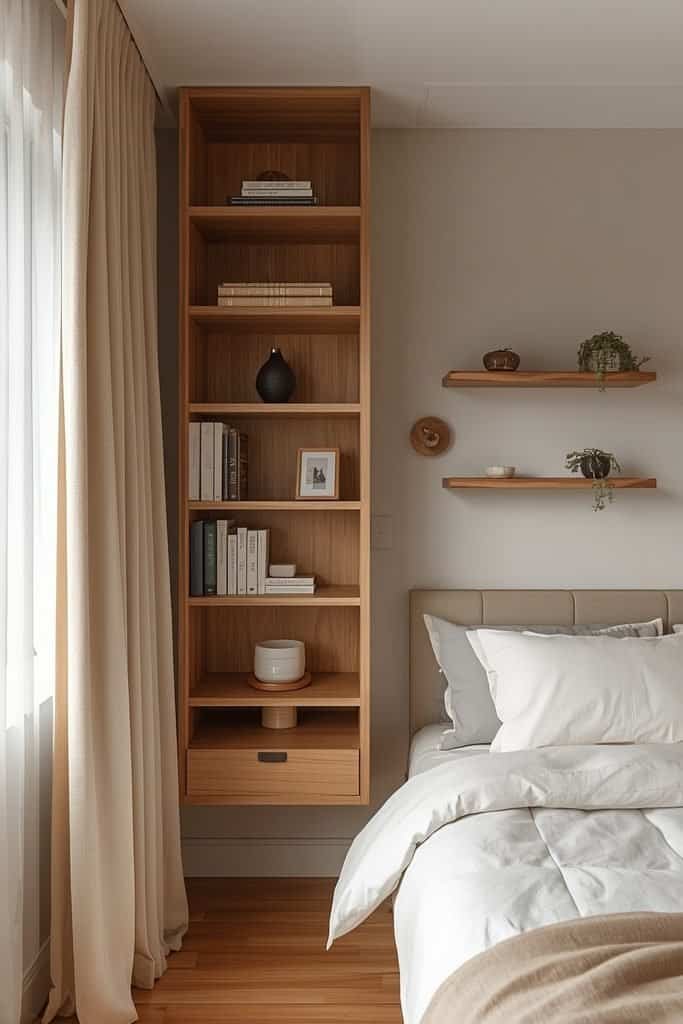
When floor space is limited, look upward. Walls can provide valuable storage and decorating opportunities without taking away from the walking area.
Use Tall Shelving and Wall Storage
A tall, narrow shelf can provide storage while using less floor area than a wide bookcase.
Floating shelves are another practical option for displaying a few books, small plants, framed artwork, or decorative objects. Keep the arrangement selective rather than filling every shelf.
Draw the Eye Up With Curtains
Mounting curtains higher than the top of the window can emphasize the vertical lines of the room.
For a softer appearance, choose curtains that extend close to the floor. This can make the wall feel taller while giving the bedroom a more finished look.
Decorate Walls Without Overcrowding Them
Vertical wall decor can help draw attention upward, but more isn’t always better.
Choose one strong arrangement rather than covering every available section of wall. A tall artwork piece, vertically arranged frames, or a simple wall treatment can add interest without making the room feel busy.
4. Use Mirrors to Create the Illusion of More Space
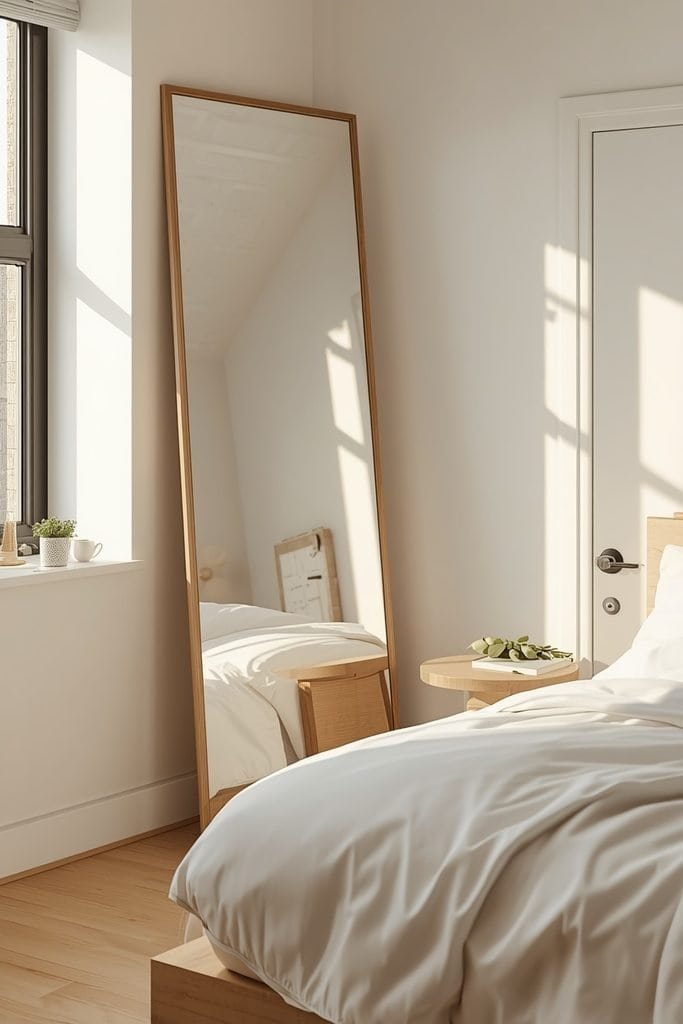
Mirrors are one of the easiest decorative tools for creating a stronger sense of depth in a small bedroom. When positioned thoughtfully, they can reflect light and extend the visual sightline of the room.
Choose the Right Mirror Size
Instead of collecting several tiny mirrors, consider using one larger mirror as a focal point.
A tall floor mirror can emphasize height, while a wide wall mirror can visually expand a narrow section of the room. Choose the size according to the wall and furniture around it rather than simply choosing the largest option available.
Place Mirrors Where They Reflect Light
Positioning a mirror near a window can help reflect natural light around the room. It can also be useful to reflect an attractive part of the bedroom rather than a cluttered corner.
A mirror that reflects a tidy, bright area can enhance the sense of openness, while one that reflects clutter can have the opposite effect.
Try Mirrored or Reflective Furniture Accents
If you don’t have room for a large floor mirror, smaller reflective surfaces can still contribute to the overall effect.
A mirrored wardrobe door, glossy bedside surface, or framed decorative mirror can introduce reflection without requiring additional floor space.
5. Make the Bed a Cozy Focal Point
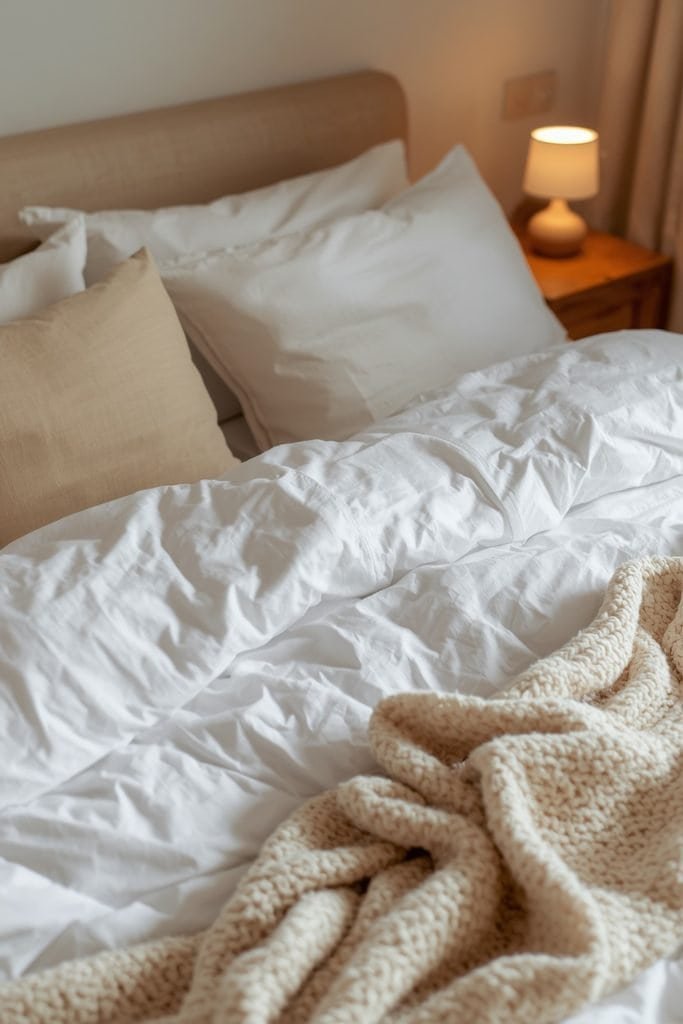
The bed will usually be the largest object in a small bedroom, so instead of trying to hide it, make it the intentional focal point.
Layer Bedding Without Adding Bulk
Use a simple combination of fitted sheets, a duvet or comforter, pillows, and one textured throw.
Too many layers can make the bed look oversized, especially in a compact room. Focus on a few materials with different textures rather than piling on numerous decorative pieces.
Use Pillows Strategically
A small bedroom doesn’t need a huge collection of decorative pillows.
Two sleeping pillows combined with a couple of smaller accent pillows can create a polished appearance without making the bed feel crowded.
Add One Textured Throw
A knit, woven, or softly textured throw at the foot of the bed can add warmth and visual interest.
Choose a color that connects with another element in the room, such as the curtains, rug, artwork, or bedside accessories. Repeating a small number of colors helps the room feel cohesive.
6. Keep Surfaces Clear and Clutter-Free
Visual clutter can make a small bedroom feel even smaller. Keeping frequently used surfaces organized creates more visual breathing room without requiring a major redesign.
Use Floating Nightstands
Floating nightstands or wall-mounted shelves can free up some visible floor space beneath the bedside area.
They’re especially useful when a traditional nightstand would make the walkway around the bed feel too narrow.
Hide Everyday Essentials
Chargers, paperwork, cosmetics, and other small items can quickly turn a clean bedroom into a visually busy one.
Use drawers, baskets, boxes, or under-bed storage to keep everyday necessities close without leaving them scattered across open surfaces.
Follow a Simple Styling Rule
Instead of filling every surface with decor, choose a few items that are both useful and attractive.
A small lamp, a book, and a simple vase can be enough for a nightstand. Leaving part of the surface empty makes the entire arrangement feel more intentional.
7. Layer Lighting Without Taking Up Floor Space
Lighting can change the perceived atmosphere and depth of a small bedroom. Rather than relying on one bright ceiling fixture, combine different sources of light at different heights.
Layer Ambient and Task Lighting
A ceiling fixture can provide general illumination, while bedside lamps or wall sconces can provide focused light for reading and nighttime routines.
Using several softer light sources can make the room feel more dimensional and relaxing.
Choose Warm Bulbs for a Cozy Atmosphere
Warm lighting can help a bedroom feel calmer in the evening. Look for bulbs with a warm color temperature if you want a softer atmosphere rather than a cool, bright appearance.
Use Wall Lighting to Save Floor Space
Wall-mounted sconces are especially useful in small bedrooms because they provide bedside lighting without requiring a traditional table lamp and a larger nightstand.
This is another example of using the walls to solve a floor-space problem.
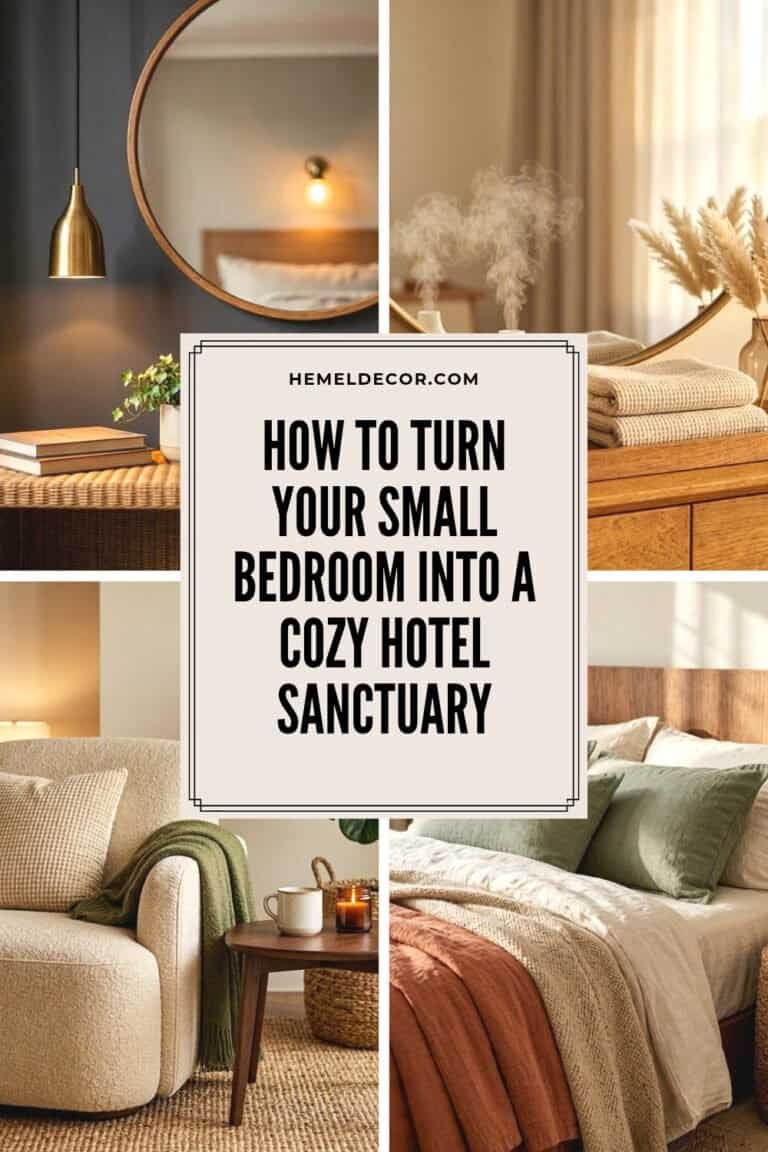
If you want more ideas for creating a relaxing bedroom atmosphere with layered lighting, see our guide on how to turn a small bedroom into a cozy hotel sanctuary.
8. Bring in Greenery Without Losing Space
Plants can add life and softness to a bedroom, but large floor plants aren’t always practical in a compact room.
Try Small Plants on Shelves
A small plant on a floating shelf, dresser, or windowsill can introduce greenery without occupying valuable floor space.
Choose a container that complements the room rather than adding another competing color.
Use Hanging or Wall-Mounted Planters
Hanging planters can bring greenery into unused vertical space. Wall-mounted planters can work similarly while keeping surfaces and floors clear.
Keep the number of plants proportional to the room. A few carefully placed plants can feel refreshing without turning the bedroom into a crowded display.
Choose Plants That Suit Your Space
Consider the amount of natural light available before choosing plants.
A bedroom with limited sunlight may be better suited to varieties that tolerate lower-light conditions. If you’re unsure, choose low-maintenance options that match the actual conditions of your room.
9. Use a Rug to Define the Bedroom
A well-chosen rug can make a bedroom feel more finished and comfortable while helping visually anchor the bed.
Avoid Rugs That Are Too Small
A tiny rug floating beside the bed can make the room feel fragmented.
When possible, choose a size that extends beyond the sides of the bed enough to visually connect the sleeping area.
Use the Rug to Anchor the Bed
Positioning a rug so that it sits beneath the lower portion of the bed can create a defined zone without requiring additional furniture.
This is especially useful in small bedrooms where the bed already occupies much of the available space.
Choose Simple Patterns for Small Rooms
If the bedroom already contains several patterns, choose a rug with a subtle design or solid tone.
A restrained pattern can add texture without creating another strong visual boundary.
10. Small Bedroom Ideas: Keep Your Decor Intentional
The final step is knowing when to stop decorating.
A small bedroom can look more spacious when every visible item has a clear purpose or contributes to the overall design. Recent designer guidance similarly emphasizes minimizing visual breaks, controlling furniture scale, and using cohesive tones to make compact bedrooms feel more expansive.
Choose a Small Number of Statement Pieces
Rather than filling the room with small decorative objects, choose a few pieces that have enough presence to make an impact.
A large framed print, sculptural lamp, textured throw, or attractive mirror can often do more for the room than a collection of tiny accessories.
Repeat Colors and Textures
Choose a small palette and repeat it throughout the bedroom.
For example, warm beige bedding can connect with a cream rug, light wood furniture, and natural woven accessories. Repetition creates visual consistency and helps individual pieces feel like part of one design.
Leave Some Areas Visually Quiet
Not every wall, shelf, or corner needs decoration.
Empty space is part of the design. Leaving some surfaces intentionally quiet allows the eye to rest and makes the room’s favorite features stand out.
Conclusion
A small bedroom doesn’t need to feel cramped to be functional and comfortable. The right combination of scale, color, lighting, storage, and intentional decor can make a compact room feel noticeably more open while preserving the cozy atmosphere you want from a bedroom.
Start with the changes that make the biggest difference: keep the furniture appropriately scaled, use vertical space, introduce a well-positioned mirror, control clutter, and create a cohesive color palette. Then add personal touches gradually rather than trying to decorate every corner at once.
The goal isn’t to make your bedroom look empty. It’s to make every element feel intentional.
Frequently Asked Questions
How can I make my small bedroom look bigger?
Use light or cohesive colors, appropriately scaled furniture, mirrors that reflect light, vertical storage, and uncluttered surfaces. Keeping visual transitions simple can also help the room feel more open.
What colors make a small bedroom look bigger?
Soft whites, warm neutrals, light beige, cream, and muted tones can create an airy feeling. You don’t need to avoid darker colors completely; use them as smaller accents to add contrast without overwhelming the room.
How do you make a small bedroom feel cozy?
Layer soft bedding, use warm lighting, add a few tactile textures, and choose a limited number of personal decorative pieces. Keeping clutter under control helps the room feel calm rather than crowded.
What furniture is best for a small bedroom?
Look for furniture that fits the room’s scale and, when possible, performs more than one function. Floating shelves, narrow nightstands, beds with storage, and furniture with visible legs can help preserve usable floor space.
More Small-Space Bedroom Ideas
Once you’ve made your bedroom feel more spacious, you can take the cozy factor further with thoughtful bedding, warm lighting, and hotel-inspired details.
For another approach, explore our guide on turning a small bedroom into a cozy hotel sanctuary and discover ways to create a more relaxing, polished bedroom atmosphere.




One Comment