

10 Small Living Room Ideas That Make a Tiny Space Feel Bigger
A small living room can be difficult to decorate. A sofa, coffee table, television, storage, and everyday essentials can quickly make the space feel crowded.
But having limited square footage doesn’t mean your living room has to feel cramped. The right furniture, layout, colors, lighting, and decor can make a noticeable difference in how open the room feels.
These small living room ideas focus on creating more visual breathing room without sacrificing comfort. Whether you’re working with a compact apartment living room or simply want to make a tight space feel more inviting, these practical ideas can help you use the room more effectively.
Small Living Room Ideas: Choose Furniture That Fits the Room
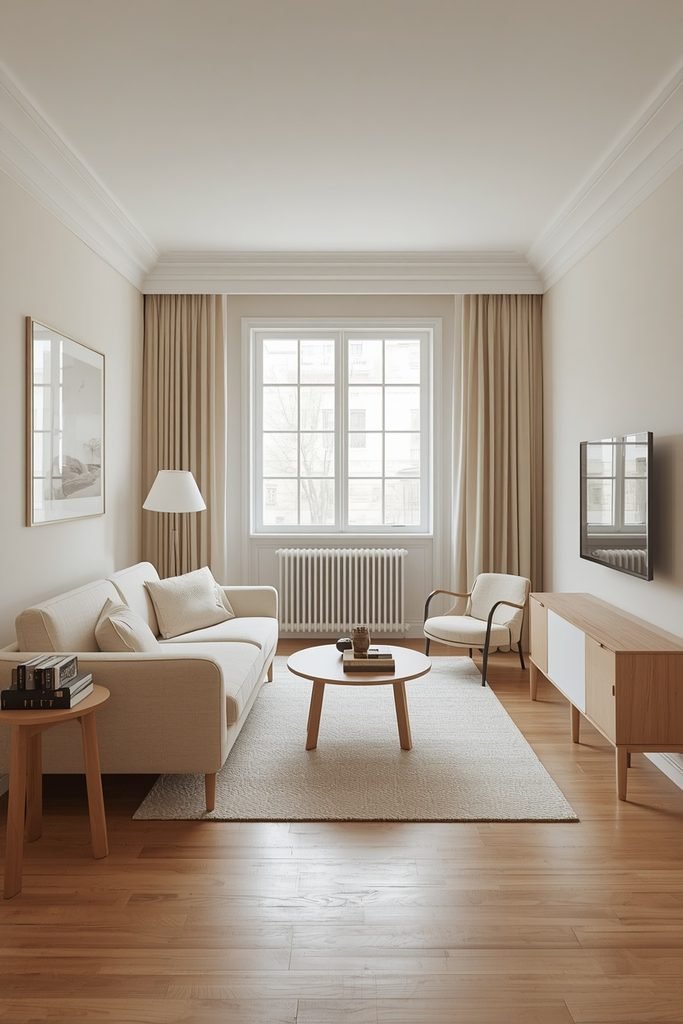
One of the easiest ways to make a small living room feel larger is to choose furniture according to the actual size of the space.
A piece can look beautiful in a showroom but feel overwhelming once it is placed in a compact room. Before buying furniture, consider not only its dimensions but also how much visual space it occupies.
Avoid Bulky Pieces That Block the Space
Large, deep sofas and oversized cabinets can quickly dominate a small living room.
Instead, look for furniture with slimmer profiles and proportions that leave enough room for movement. A compact sofa with clean lines can often provide the same seating function without visually overwhelming the room.
The goal isn’t to use the smallest furniture possible. It’s to find pieces that feel proportional to the room.
Let Some Floor Show
Furniture that completely fills the floor can make a living room feel heavier.
Pieces with visible legs can create a little more visual openness because more of the floor remains visible underneath. This doesn’t mean every piece needs to be raised off the ground, but combining a sofa, chair, or table with a lighter profile can help.
Even a small amount of visible flooring can make the overall arrangement feel less crowded.
Consider Multi-Functional Furniture
When space is limited, furniture that serves more than one purpose can be particularly useful.
A storage ottoman can function as extra seating, a footrest, or a place to hide blankets. A compact console can provide storage without requiring the footprint of a larger cabinet.
Choosing fewer pieces that perform multiple functions can help prevent a small living room from becoming overloaded with furniture.
Create a Clear and Comfortable Layout
A well-planned layout can make a small living room feel significantly easier to move through.
Rather than pushing furniture into every available corner, think about the paths you naturally use when entering, sitting, and moving around the room.
Keep the Main Walkway Open
Try to maintain a clear path between the main entrance and the areas you use most frequently.
A coffee table that sits too close to a sofa or chair can make even a reasonably sized room feel difficult to navigate. Leave enough comfortable space around the major furniture pieces so movement doesn’t feel restricted.
Give the Sofa Enough Breathing Room
The sofa will often be the largest item in a small living room, so its placement matters.
Avoid automatically pushing it against a wall simply because the room is small. Depending on the layout, leaving a small amount of space behind or beside the sofa can sometimes create a more intentional arrangement.
Avoid Filling Every Wall
A common mistake is assuming that every empty wall needs furniture or decoration.
Leaving some walls relatively quiet gives the room visual breathing space. Instead of adding another cabinet simply because a wall is empty, consider whether the room actually needs it.
Use a Large Rug to Anchor the Seating Area
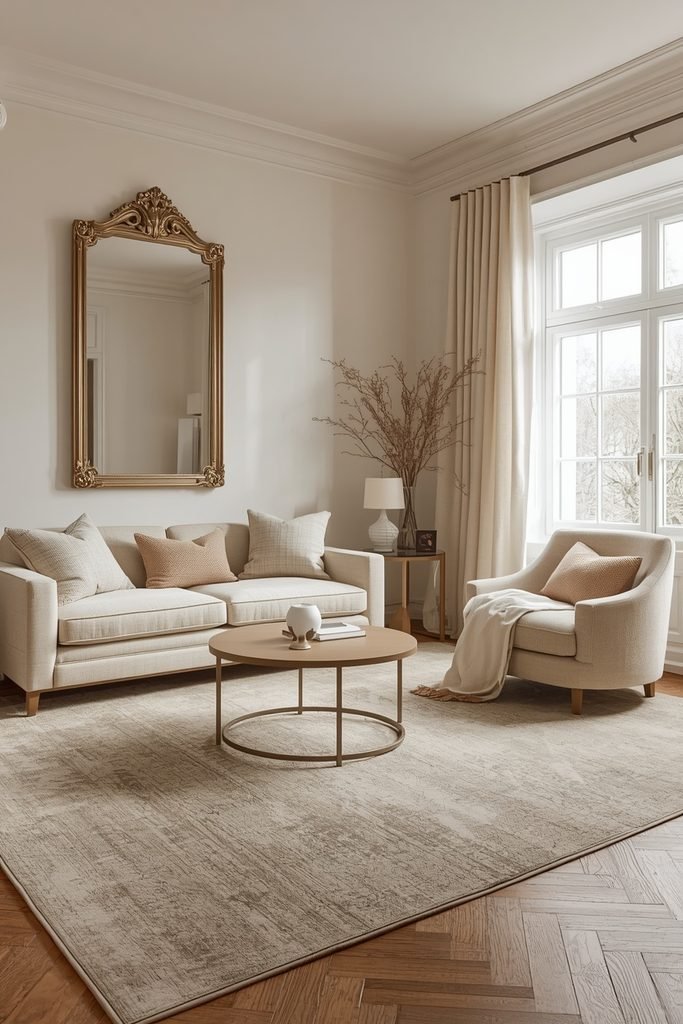
A rug can help connect the main seating pieces and create a defined living area.
Ironically, a rug that is too small can sometimes make a small room feel even more fragmented because the furniture appears disconnected.
Avoid the Tiny Rug Trap
A small rug floating in the middle of the seating area can visually divide the room into separate pieces.
Whenever possible, choose a rug that is large enough to connect at least some of the main furniture. This helps create one cohesive seating zone.
Connect the Main Furniture
Ideally, the front legs of the sofa and chairs can sit on the rug, depending on the size and layout of the room.
If a full-size rug isn’t practical, place it strategically beneath the central portion of the seating arrangement rather than leaving it isolated in the middle of the floor.
Choose a Simple Pattern
A subtle rug pattern can add texture without overwhelming a compact space.
If your sofa, curtains, and artwork already contain several patterns, choose a rug with a quieter design. Repeating a few colors throughout the room can also make the overall space feel more cohesive.
Use Mirrors to Reflect Light and Depth
Mirrors can be useful in small living rooms because they reflect light and can create the impression of additional visual depth.
The key is placement. A mirror works best when it reflects something bright or attractive rather than an area filled with clutter.
Place a Mirror Near Natural Light
Positioning a mirror across from or near a window can help reflect daylight into the room.
This can make darker areas feel brighter while giving the room a stronger sense of openness.
Choose One Strong Focal Mirror
Instead of covering a wall with multiple small mirrors, consider using one larger mirror as a deliberate focal point.
A tall mirror can emphasize height, while a wider mirror can work well above a console or sofa.
Be Intentional About What the Mirror Reflects
Before hanging a mirror, look at what will appear inside it.
Reflecting a window, artwork, greenery, or an uncluttered part of the room can enhance the space. Reflecting a messy corner can make the room feel busier instead.
Take Advantage of Vertical Space
When floor space is limited, the walls become valuable real estate.
Using vertical space allows you to add storage and decoration without taking up more of the walking area.
Use Tall Shelving
A tall, narrow bookcase can provide useful storage while taking up less floor width than a wide shelving unit.
Keep the shelves intentionally styled. A combination of books, baskets, small plants, and a few decorative objects can provide function without creating visual clutter.
Hang Curtains Higher
Installing curtain rods closer to the ceiling can draw the eye upward and emphasize the height of the room.
Choose curtains that extend toward the floor for a more finished appearance. Light or neutral fabrics can also help maintain an airy feeling.
Draw Attention Upward With Wall Decor
Vertical artwork, tall plants, or a simple arrangement of framed pieces can guide the eye upward.
This doesn’t mean covering every inch of wall. A carefully chosen vertical arrangement is usually more effective than a crowded gallery of unrelated objects.
Keep the Color Palette Light and Cohesive
Color can strongly influence how spacious a living room feels.
Light colors aren’t the only option, but a cohesive palette can reduce visual interruptions and help different elements of the room feel connected.
Start With Warm Neutrals
Soft white, cream, beige, warm gray, and light taupe can create a calm foundation.
Warm neutrals are particularly useful if you want the room to feel cozy rather than stark. They also work well with natural wood, woven textures, and greenery.
Repeat Colors Throughout the Room
Choose a small group of colors and repeat them in different elements.
For example, a cream sofa might connect with a beige rug, light curtains, and natural wood accessories. Repetition creates continuity and makes the room feel more intentionally designed.
Add Contrast Through Small Accents
A small living room doesn’t have to be completely neutral.
Introduce deeper colors through cushions, artwork, books, or decorative objects. Keeping stronger colors limited to smaller areas allows you to add personality without making the room feel visually heavy.
Layer Lighting to Open Up Dark Corners
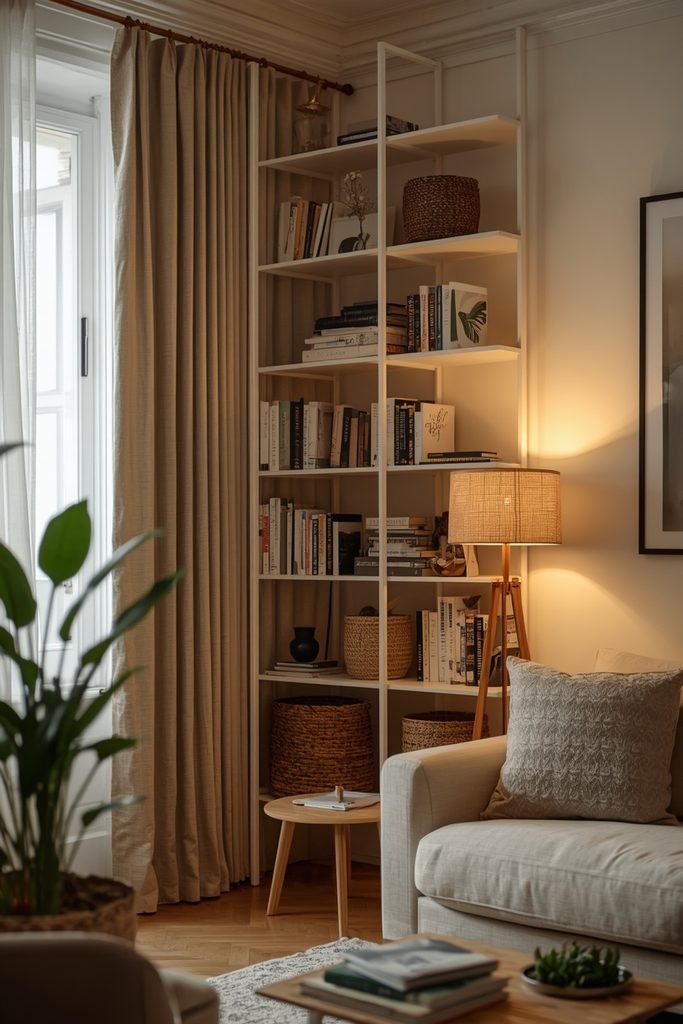
Good lighting can make a small living room feel warmer and more dimensional.
Instead of depending entirely on one ceiling fixture, combine several light sources at different heights.
Combine Different Light Sources
Use a mixture of ceiling lighting, table lamps, floor lamps, and wall lighting where appropriate.
Multiple sources allow you to illuminate different areas of the room rather than creating one bright central point.
Use Floor and Table Lamps Strategically
A floor lamp can brighten an otherwise dark corner without requiring another piece of large furniture.
Table lamps work well on consoles or side tables, but choose slimmer designs when surface space is limited.
Choose Warm Light for Evening Comfort
Warm light can create a softer and more relaxing atmosphere in the evening.
If the living room doubles as a reading or working area, combine general warm lighting with focused task lighting so the room remains practical as well as comfortable.
Choose Coffee Tables With a Light Visual Weight
Coffee tables are useful, but the wrong shape or size can make a small living room feel difficult to navigate.
Look for a table that provides the function you need while leaving enough room to move around it.
Try Round or Oval Shapes
Round and oval coffee tables eliminate sharp corners and can make movement around the seating area feel easier.
They’re particularly useful when the available walkway is tight.
Consider Nesting Tables
Nesting tables can provide additional surface area when needed while taking up less space when they’re not in use.
You can separate them when guests arrive and stack them together when you want to keep the room more open.
Leave Enough Walking Space
Don’t choose a coffee table simply because it fits between the sofa and television.
Make sure there is comfortable clearance around it. A slightly smaller table that allows easier movement can be a better choice for a compact living room.
Make Storage Part of the Decor
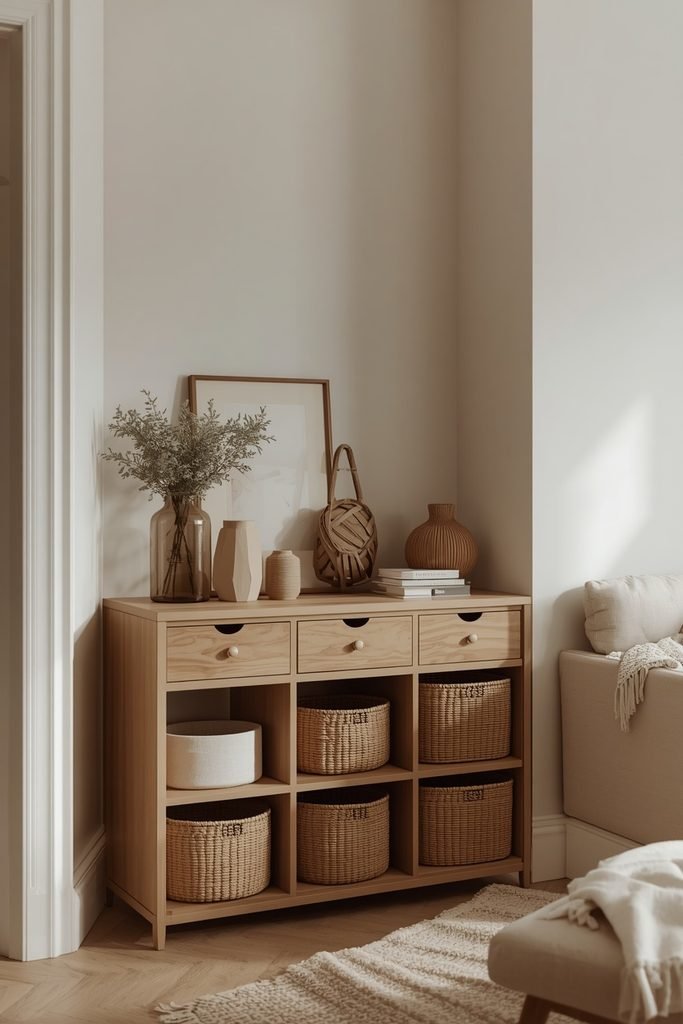
Storage doesn’t have to look like an afterthought.
When storage is integrated into the overall design, it can help keep a small living room organized without making it feel overly functional.
Choose Closed Storage for Visual Calm
Closed cabinets and drawers can hide items that would otherwise create visual clutter.
Use them for electronics, paperwork, games, and other everyday objects that don’t need to remain visible.
Use Baskets for Small Items
Woven baskets can provide practical storage while adding warmth and texture.
Place them beneath a console, on an open shelf, or beside the sofa for blankets, magazines, and other frequently used items.
Keep Open Shelves Selective
Open shelving works best when it isn’t packed from edge to edge.
Leave some empty space between books and decorative pieces. A smaller collection of thoughtfully chosen objects will usually look more polished than a crowded display.
Keep Decor Intentional and Uncluttered
The final step is knowing when to stop.
A small living room doesn’t need to be filled with decorative objects to feel complete. In many cases, fewer pieces can make the room feel more sophisticated and spacious.
Choose a Few Statement Pieces
Instead of decorating every surface, choose a few items that have enough visual impact to stand on their own.
A large piece of artwork, an attractive lamp, or a statement mirror can create more impact than several small accessories.
Mix Texture Instead of Adding More Objects
You can add visual interest without adding more things.
Combine materials such as linen, wood, woven fibers, ceramic, and soft textiles. Different textures create depth while keeping the number of visible objects under control.
Leave Some Negative Space
Empty space is not wasted space.
Leaving portions of shelves, walls, and surfaces undecorated gives the eye somewhere to rest. It also allows the pieces you do choose to stand out.
Conclusion
A small living room can still feel open, comfortable, and stylish when every element is chosen with the available space in mind.
Start with the basics: choose appropriately scaled furniture, create a clear layout, use a well-sized rug, and take advantage of vertical space. Then add mirrors, layered lighting, practical storage, and a cohesive color palette to improve the room’s sense of depth and comfort.
Most importantly, don’t feel pressured to fill every corner. A thoughtful arrangement with a little breathing room can make a bigger difference than adding more furniture or decoration.
The best small living room is not necessarily the one with the most features. It’s the one where everything has a purpose.
Frequently Asked Questions
How can I make my small living room look bigger?
Use appropriately scaled furniture, keep the main walkway open, choose a cohesive color palette, and use mirrors to reflect natural light. Reducing visual clutter and leaving some floor and wall space open can also make the room feel more spacious.
What furniture is best for a small living room?
Choose furniture that fits the scale of the room and doesn’t unnecessarily block walking areas. Slim-profile sofas, nesting tables, storage ottomans, floating shelves, and multi-functional furniture can be useful in compact spaces.
What color makes a small living room look bigger?
Soft whites, creams, beige, warm gray, and other light neutral tones can help create an airy appearance. The most important factor is maintaining a cohesive palette rather than relying on one specific color.
Should a small living room have a large rug?
A properly sized rug can help a small living room feel more cohesive by visually connecting the seating area. Avoid very small rugs that sit isolated in the middle of the room and make the furniture arrangement feel fragmented.
More Cozy Living Room Ideas
Looking for more ways to make a small living room feel comfortable without spending too much?
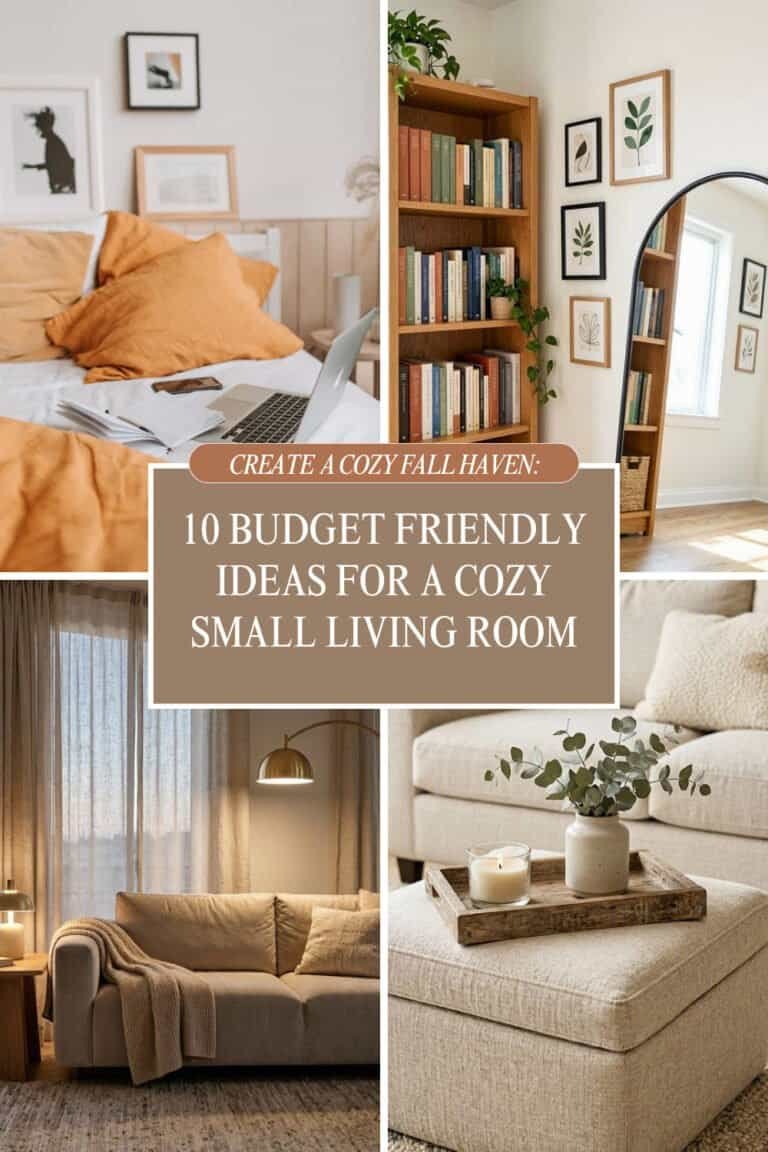
Explore our guide to 10 Budget-Friendly Cozy Living Room Ideas for Small Apartments for more practical decorating inspiration.

2 Comments