

15 Fabric Ceiling Ideas to Transform Your Space
A plain ceiling can sometimes make a room feel unfinished, even when the furniture and decor are beautiful. One way to change that is to introduce fabric. Soft folds, layered textures, and flowing panels can add dimension overhead and make a room feel more intimate without changing the entire interior.
Fabric ceiling ideas can work in several styles, from a romantic bedroom with sheer white drapes to a bohemian lounge with textured textiles or a dining room with carefully arranged fabric panels. The effect depends on the fabric, the way it hangs, and how it relates to the rest of the room.
Before choosing a design, consider the ceiling height, the size of the room, and whether the fabric will be a permanent installation or a temporary decorative feature. You also need to account for fire safety, ventilation, lighting, and access to sprinklers or smoke detectors.
If you’re looking for a creative way to bring more softness and personality into your home, these fabric ceiling ideas offer a range of styles to explore.
1. Soft White Fabric Draping
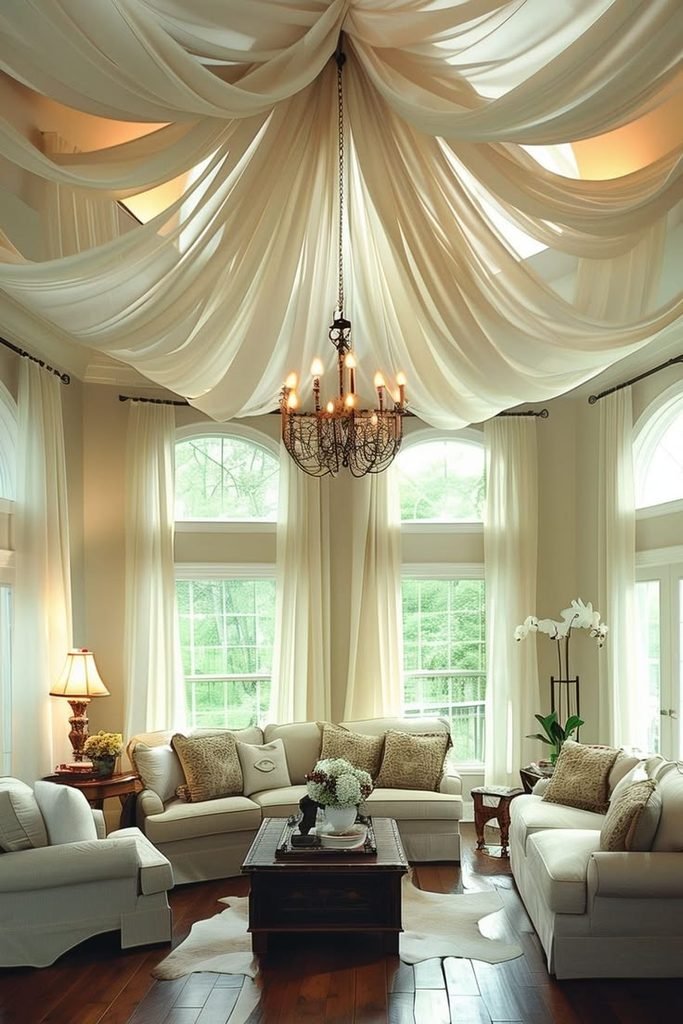
White fabric draping is a classic choice when you want a ceiling to feel softer without introducing a strong color. Lightweight-looking white panels can create gentle curves overhead, making a bedroom, sitting area, or covered event-style space feel calm and airy.
For a more natural result, choose fabric with a subtle texture rather than a perfectly smooth, shiny finish. Cotton voile or a suitable sheer textile can create a delicate effect, while a slightly heavier matte fabric produces fuller folds. Keep the arrangement loose and irregular enough to feel relaxed, but plan the layout carefully so the drapes don’t look accidental.
This design works especially well with pale walls, warm wood, woven baskets, and simple bedding. If the room already contains patterned curtains or colorful artwork, a white ceiling treatment can provide a visual pause.
The installation matters as much as the fabric. Use a support system designed for the ceiling and the material’s weight, and avoid placing fabric near hot light fixtures, heaters, or other ignition sources.
2. Romantic Bedroom Fabric Ceiling
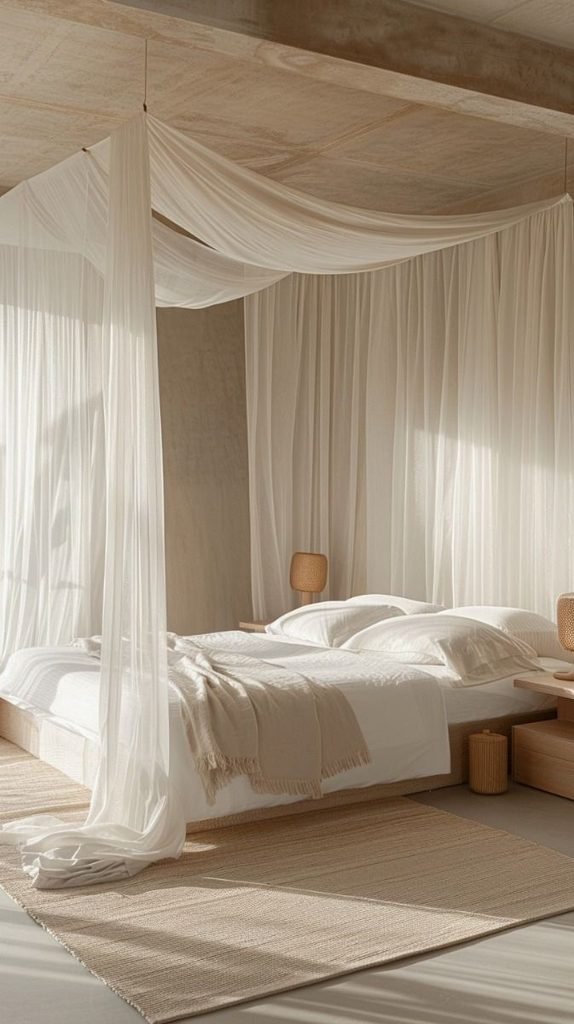
Fabric draped above a bed can make the sleeping area feel like a private retreat. Instead of covering the entire ceiling, concentrate the fabric over the bed so it creates a visual canopy and gives the room a more intimate focal point.
Sheer white, warm ivory, muted blush, or soft taupe can work beautifully with layered bedding. You can pair the fabric with a simple upholstered headboard, bedside tables in natural wood, and understated lamps. For a more relaxed look, let the bedding carry most of the texture while the ceiling remains light and flowing.
In a small bedroom, keep the canopy narrow and visually connected to the bed. A large draped installation can make a low ceiling feel even lower, so leave some ceiling visible around the edges.
Plan the arrangement before hanging anything. Fabric should be secured with appropriate hardware, kept away from bulbs and electrical equipment, and installed so it cannot fall onto the bed. If the ceiling is low or the room has limited ventilation, a wall-mounted canopy or a bed-frame canopy may be a more practical alternative.
3. Boho Canopy Ceiling
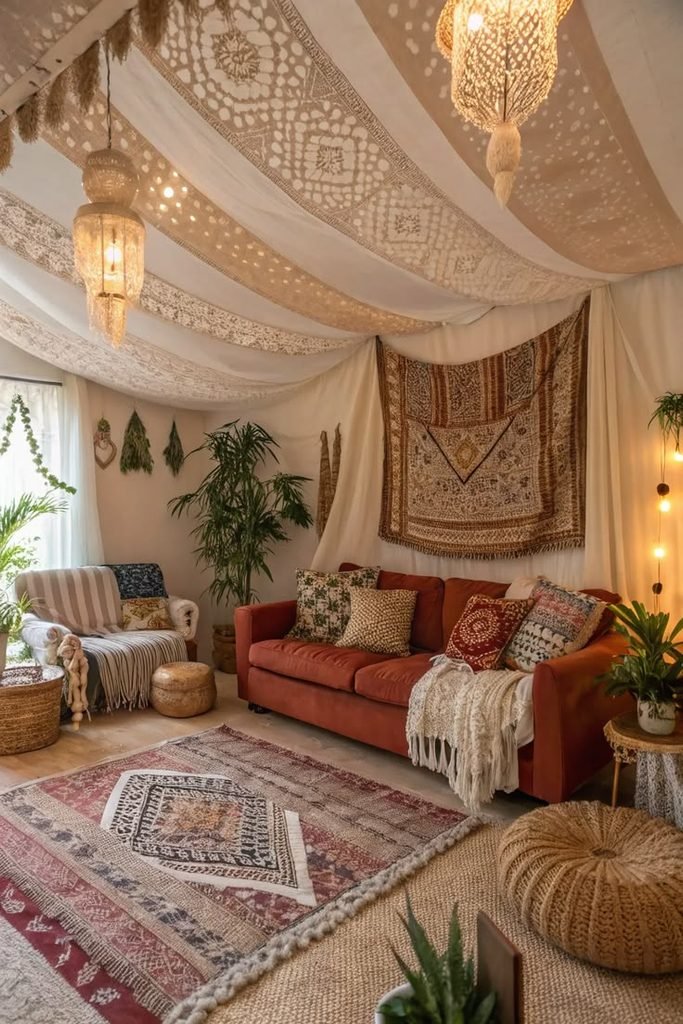
A bohemian-inspired ceiling can bring a relaxed, layered look to a bedroom or lounge. The key is combining fabric with natural textures rather than filling the entire space with decorations.
Start with a lightweight neutral textile, then introduce warmth through rattan furniture, woven pendant shades, wood accents, and a few patterned cushions. If you want more color, consider rust, ochre, dusty blue, or muted terracotta. These tones can complement the natural materials without making the room feel visually crowded.
You can create the impression of a canopy over a bed or a small seating area rather than draping fabric across every part of the ceiling. This makes the arrangement feel intentional and helps preserve the room’s sense of height.
For the most cohesive result, repeat one or two colors from the fabric in the bedding or accessories. Avoid mixing too many competing patterns overhead, since the ceiling already draws the eye. Make sure the support system is suitable for the fabric and that the textile is kept clear of lights, fans, and other moving or heated equipment.
4. Elegant Dining Room Draping
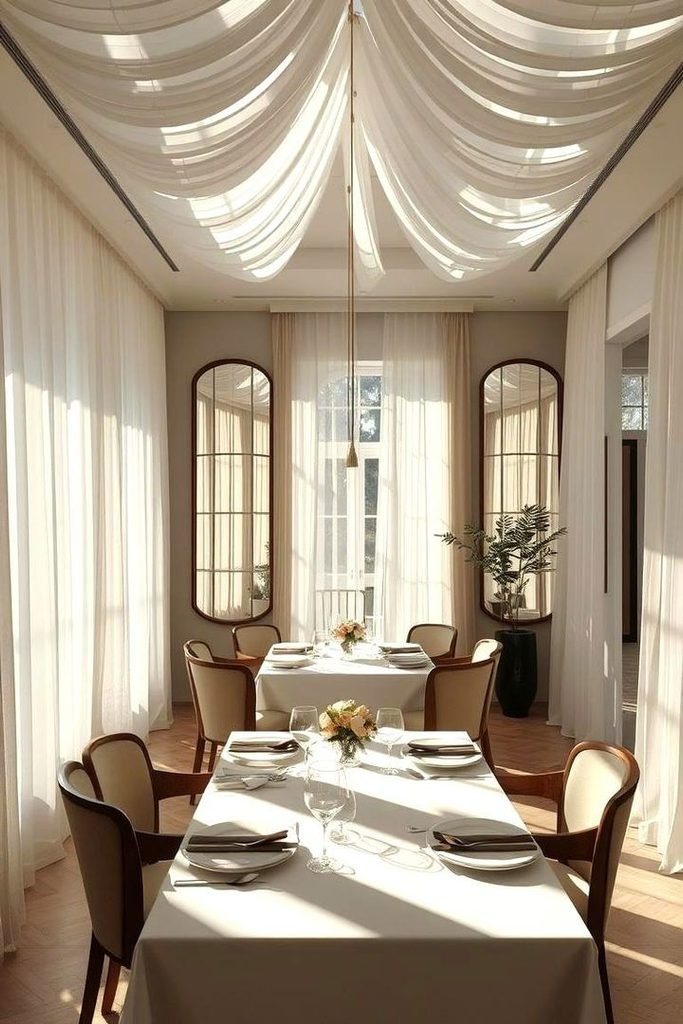
Fabric can make a dining area feel more special by creating a defined zone above the table. Soft panels arranged overhead can add texture and help distinguish the dining space from an open-plan kitchen or living room.
For a refined look, choose a matte fabric in ivory, warm gray, muted olive, or another shade that complements the dining chairs and table. A carefully arranged series of shallow folds can feel elegant without becoming overly formal. Natural wood, ceramic tableware, and simple greenery help keep the room grounded.
If the dining table is long, align the fabric treatment with the table rather than spreading it randomly across the ceiling. This creates a clear relationship between the overhead feature and the furniture beneath it. In a smaller room, a narrower fabric arrangement can provide the same effect without visually lowering the whole ceiling.
Keep the textile away from pendant lights, candles, and any other heat or flame sources. For a permanent installation, use appropriate mounting hardware and consult a qualified professional when needed. In some homes, fabric panels mounted to a separate frame may be easier to maintain than fabric attached directly to the ceiling.
5. Fabric Draping With Soft Ambient Lighting
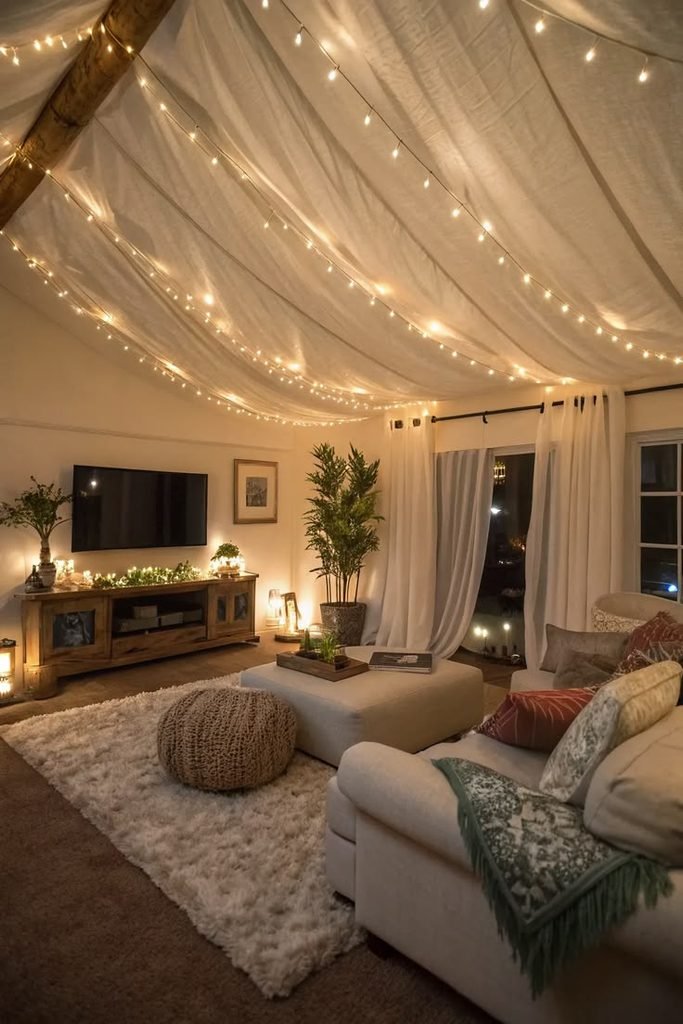
Fabric and lighting can work together to create a warm atmosphere, but the arrangement must be planned with safety in mind. A fabric ceiling can soften the visual appearance of a room, while properly positioned ambient lighting highlights the texture of the folds.
For the look, consider warm-toned lighting placed independently of the fabric, such as suitable wall lights or lamps that illuminate the ceiling indirectly. The fabric itself should not cover bulbs, fixtures, ventilation openings, or electrical components. Do not weave lights through fabric or allow textiles to touch hot fixtures.
This approach works well in bedrooms, lounges, and other spaces where soft evening lighting is desirable. A pale matte textile can show subtle shadows, while a slightly deeper shade creates a richer, more dramatic appearance.
If you’re planning a permanent installation, check the light manufacturer’s clearance requirements and local fire-safety guidance. Use lighting designed for the intended location, and have electrical work handled by a qualified professional. You can achieve a cozy visual effect without placing fabric around a heat source.
6. A Colorful Fabric Ceiling

A colorful ceiling can give a room a distinct personality, especially when the walls and larger furniture pieces are relatively simple. Rather than using a neutral drape, choose a fabric in cobalt blue, terracotta, coral, mustard, or deep green.
The most successful approach is to select one dominant color and repeat it in a few smaller details. For example, a blue ceiling treatment might connect to a patterned cushion or ceramic vase, while a terracotta textile could complement warm wood and earthy accessories. This creates a deliberate palette instead of a collection of unrelated colors.
Colorful fabric can work in a creative studio, a reading nook, or a bedroom where you want a more expressive atmosphere. If the ceiling is low, consider a partial drape or a narrow canopy instead of a full-room installation. Leaving parts of the ceiling visible can keep the space from feeling enclosed.
Pay attention to how daylight changes the fabric’s appearance. Strong sunlight can make some colors look brighter than expected, so check a sample in the actual room before committing to a large piece. Choose a textile suitable for the location and install it with secure, appropriate supports.
7. Rustic Linen Ceiling

Linen-look fabric can bring a relaxed, understated texture to a room. Its natural-looking weave pairs well with warm wood, stone, handmade ceramics, and other materials that have a little variation rather than a perfectly uniform finish.
Choose a warm white, oatmeal, soft beige, or muted gray textile to complement the existing decor. The fabric can be arranged in broad, shallow folds above a seating area or used as a smaller canopy over a bed. Keep the styling simple so the weave and drape remain the main features.
This look suits rustic, modern organic, Scandinavian-inspired, and relaxed farmhouse interiors. It also offers a quieter alternative to heavily patterned fabric, particularly when the room already contains artwork, textured rugs, or decorative bedding.
Linen and linen-look textiles can differ considerably in weight and maintenance requirements. Before installing one overhead, check the material’s care instructions, fire performance, and suitability for the space. Avoid fabric in areas where it could become damp or interfere with ventilation, and make sure the mounting system can safely support its weight.
8. Fabric Ceiling for a Cozy Reading Nook
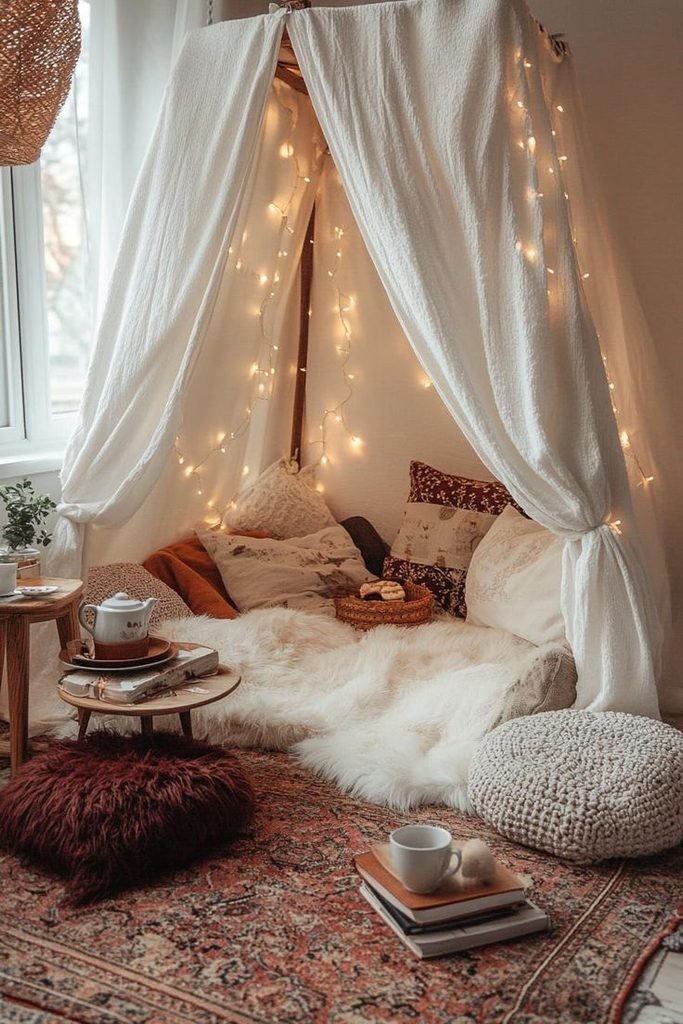
A reading nook can feel more separate from the rest of the room when it has its own visual identity. A small fabric canopy overhead helps define the corner without requiring a wall or a large piece of furniture.
Place a comfortable armchair or floor cushion beneath the fabric, then add a small side table, a reading lamp positioned safely away from the textile, and a book basket. A neutral drape keeps the nook calm, while a muted green, rust, or blue fabric can introduce more character.
The best arrangement is often a partial canopy rather than fabric stretched across the entire ceiling. This creates a sense of enclosure while leaving the surrounding room open. In a corner beside a window, the fabric can also visually connect the reading area with the curtains, provided the materials and colors are coordinated.
Keep the seating area easy to move around, and don’t allow fabric to block a window, ventilation opening, or light source. If overhead installation isn’t practical, a freestanding canopy frame can create a similar effect with less impact on the ceiling.
15 Cozy Reading Nook Ideas for a Small and Relaxing Space
9. Tent-Inspired Fabric Ceiling
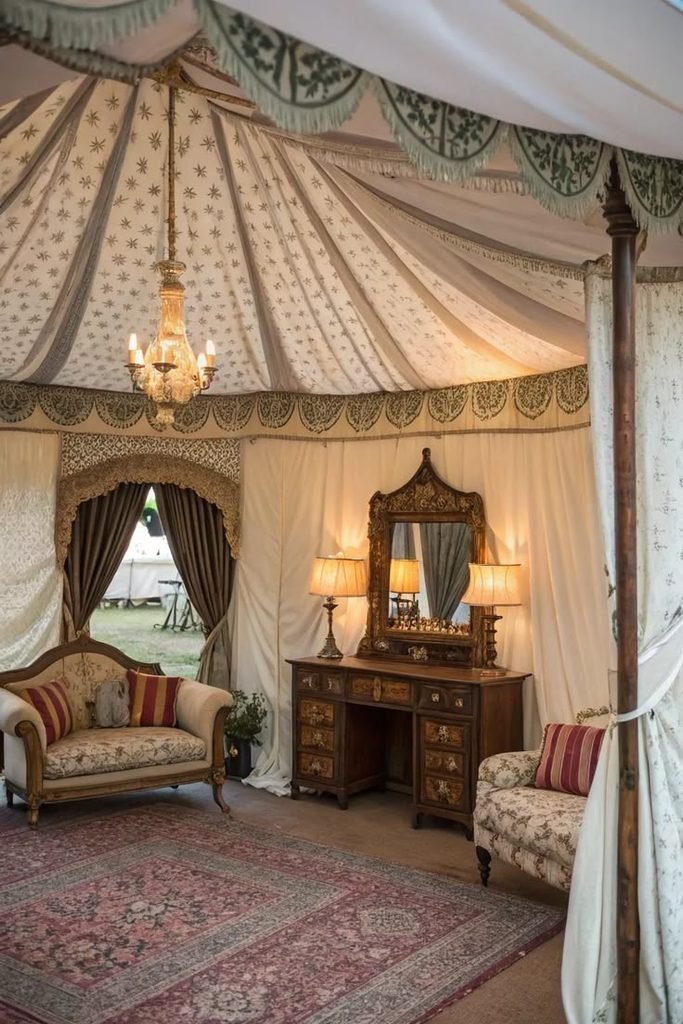
A tent-inspired ceiling uses fabric to create a more architectural shape overhead. Instead of a series of loose swags, the textile is arranged in lines that meet at a central point or extend outward from a defined support, producing the feeling of a soft indoor pavilion.
This design can work above a bed, a dining table, or a lounge area with enough ceiling height. A light neutral fabric creates an airy appearance, while a striped or subtly patterned textile can give the arrangement more personality.
The key is to make the fabric’s direction easy to understand. When the panels extend from a central point, keep the surrounding furniture and decor relatively simple. A wooden table, plain bedding, or understated seating allows the ceiling shape to remain the main feature.
A tent-like drape may require multiple support points, so don’t rely on adhesive hooks or ordinary decorative hardware unless the manufacturer specifically rates them for the load and installation surface. Plan the weight distribution and clearance carefully, especially in rooms with ceiling fans, lights, or other overhead equipment.
10. Layered Sheer Fabric Ceiling
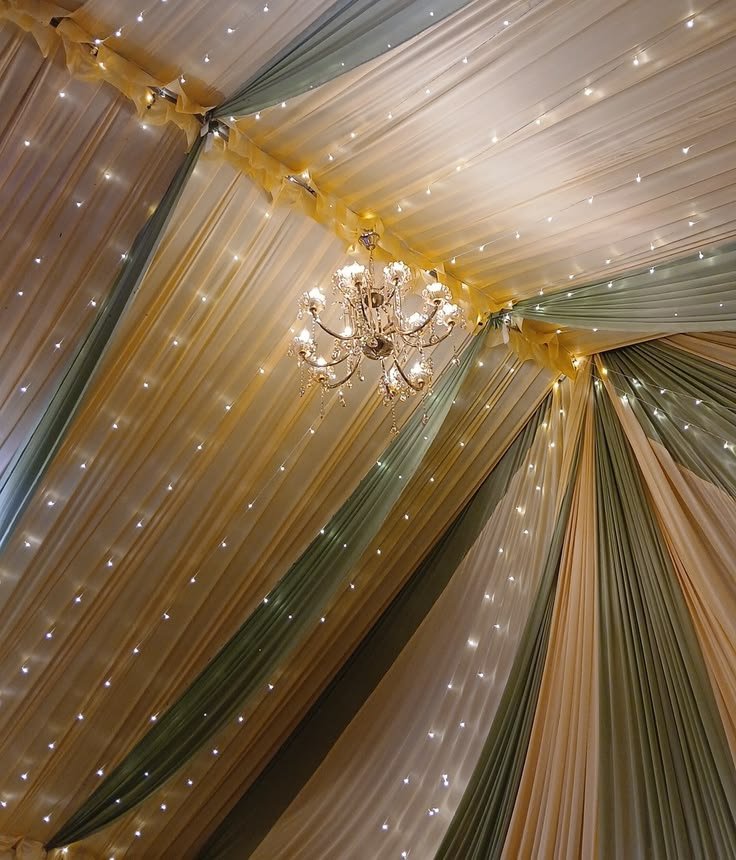
Layering sheer fabric creates depth through overlapping panels rather than through bold colors or heavy materials. This approach can make a ceiling feel soft and dimensional while still allowing much of the original ceiling to remain visible.
Try combining two similar shades, such as white and warm ivory, or use a neutral base with a very subtle accent color. The panels can overlap in gentle curves above a bed or seating area. Keep the layers limited so the installation doesn’t become bulky or obscure the room’s existing features.
This style works best when the surrounding decor is relatively restrained. Smooth walls, simple furniture, and natural textures allow the fabric’s transparency and shadows to become the focal point. It can also be an option for a temporary decorative setup when the support structure is properly designed.
Sheer fabric may look light, but multiple layers still add weight and can collect dust. Check the total load of the installation, allow access for cleaning, and use a textile suitable for the environment. Keep all layers away from hot fixtures and never cover sprinklers, smoke detectors, or ventilation outlets.
11. Patterned Fabric Ceiling

Patterned fabric can turn a plain ceiling into a distinctive design feature. Floral prints, delicate geometric shapes, stripes, or small repeating motifs each create a different mood, from traditional and romantic to modern and playful.
If the room already contains a patterned rug or wallpaper, choose a ceiling textile with a smaller-scale print or a related color palette. For a quieter room, a bolder pattern can provide the main decorative statement. Stripes can emphasize direction, while small floral motifs add a softer, more traditional feel.
A partial canopy is often the easiest way to introduce a pattern without overwhelming the space. Position it over the bed, a dining table, or a compact seating area, and repeat one color in the surrounding decor to create a visual connection.
Before installing patterned fabric overhead, check how the design will look when gathered into folds. Large motifs can become distorted, while smaller patterns may remain more consistent. Choose a fabric with appropriate fire-safety characteristics and a secure mounting system, particularly for permanent installations.
12. Canopy Draping in a Small Bedroom
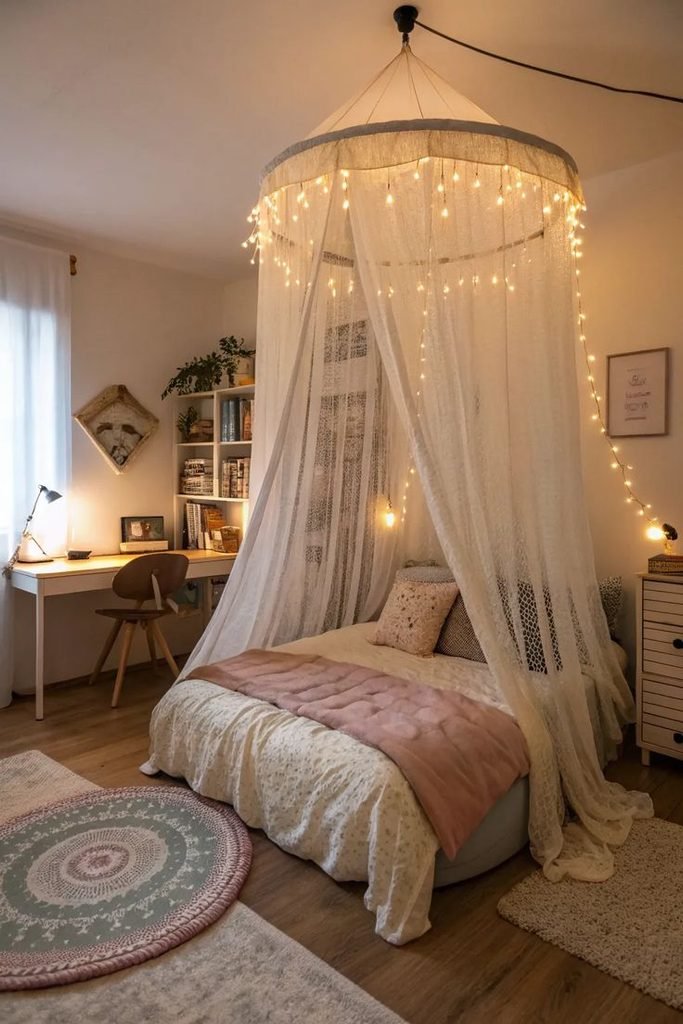
A small bedroom can benefit from fabric ceiling decor, but scale is especially important. A full ceiling covered in drapes may make the room feel lower, so a narrow canopy over the bed is often a better solution.
Use a light textile with a simple finish and let it frame the bed rather than extend into every corner. Pair it with a compact bedside table, uncluttered bedding, and wall-mounted lighting where suitable. A coordinated color palette helps the fabric feel like part of the bedroom design rather than an extra layer added afterward.
If you prefer a more colorful style, use one accent shade in the canopy and repeat it in a pillow or throw. Avoid bulky fabric and excessive layers, which can dominate a small room and make cleaning more difficult.
Think about everyday use as well as appearance. The fabric should not interfere with ceiling fans, window operation, ventilation, or access to lighting. A freestanding canopy or a bed-frame design may be easier to install and maintain than a ceiling-mounted treatment.
13. Neutral Fabric Ceiling
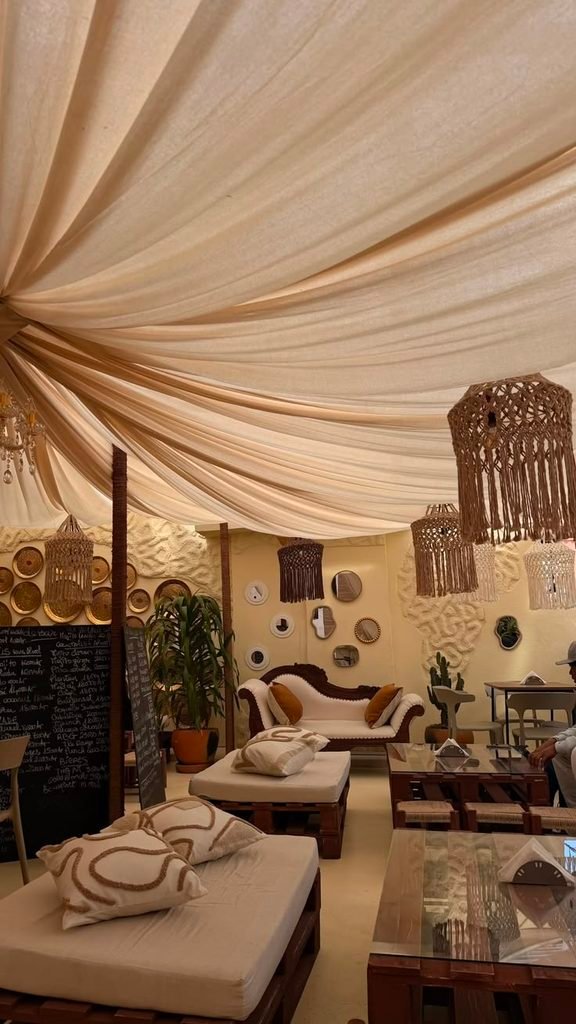
A neutral fabric ceiling can add texture without competing with the rest of the room. Shades such as ivory, sand, oatmeal, and warm gray work particularly well when combined with wood furniture, woven accessories, and natural-looking finishes.
Instead of relying on color contrast, focus on the shape of the drape. Broad folds can create a relaxed appearance, while more evenly spaced panels feel structured and tailored. The amount of fabric matters, too: a small canopy can make a subtle statement, while a larger arrangement becomes a dominant feature.
Neutral fabric is versatile enough for bedrooms, dining rooms, and quiet sitting areas. It can complement both modern interiors and more traditional spaces, especially when the textile has a visible weave or a matte finish.
To prevent the room from feeling flat, vary the textures elsewhere. A knitted throw, a wooden side table, a woven basket, or ceramic accessories can add depth without introducing more colors. Before installation, check the fabric’s weight, maintenance requirements, and suitability for overhead use.
14. Dramatic Dark Fabric Ceiling
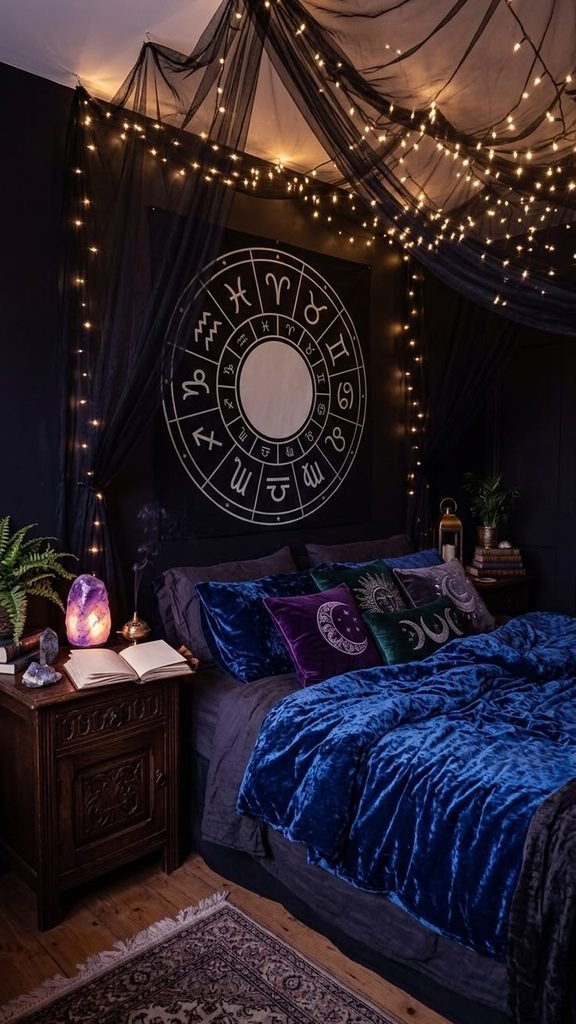
A dark fabric ceiling can create a rich, intimate atmosphere in a room with enough space and appropriate lighting. Deep green, burgundy, navy, or charcoal fabric can contrast beautifully with warm wood, pale walls, and brass-toned accessories.
You don’t need to cover the entire ceiling to achieve the effect. A dark canopy above a bed or a carefully defined fabric panel over a lounge area can provide a dramatic focal point without making the whole room feel enclosed.
Balance the deeper shade with lighter bedding, cushions, or furniture. Natural materials can soften the contrast, while a restrained number of metallic or ceramic accents adds interest. Consider the room’s ceiling height and natural light before choosing a very dark textile, because the color can make the overhead area feel visually heavier.
As with any fabric ceiling treatment, secure mounting and fire safety are essential. Dark fabric can also show dust and lint depending on its texture, so choose a material that can be cleaned and maintained appropriately.
15. Fabric Draping for a Covered Patio
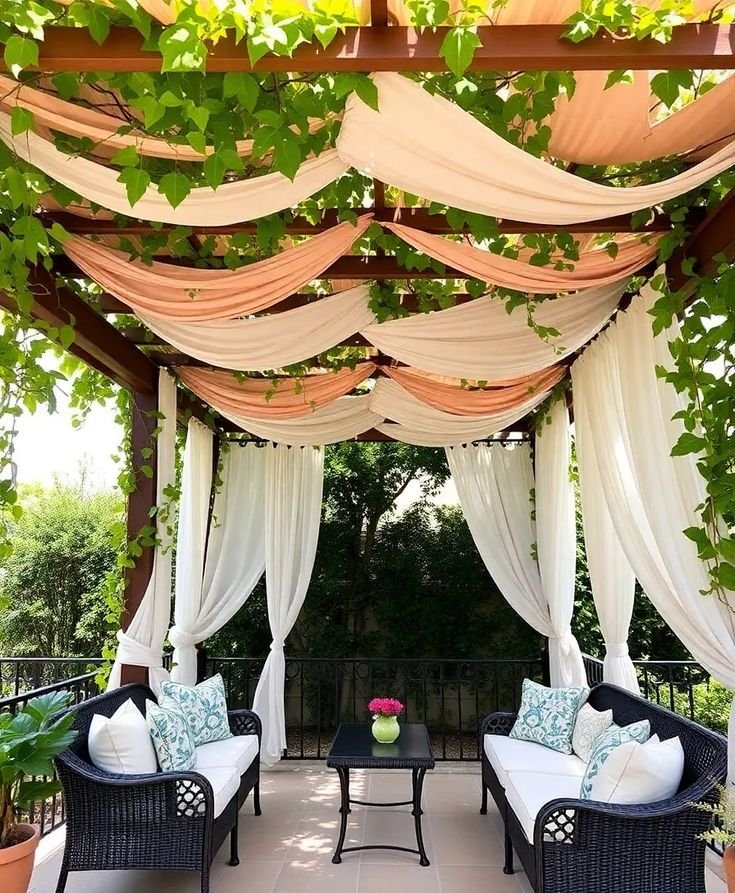
Fabric can soften a covered patio and make the outdoor area feel more like an extension of the home. Outdoor-rated curtains or carefully supported textile panels can introduce color, texture, and a sense of enclosure without requiring permanent walls.
For a relaxed look, choose fabrics in natural tones, stripes, or colors that relate to the outdoor cushions and planters. A light textile can complement wood and greenery, while a richer color can give a dining or lounge area more personality. Make sure the fabric is specifically suitable for the weather conditions and exposure at your property.
Outdoor installations need additional planning. Wind can pull on fabric and its supports, while humidity and rain can encourage mold or mildew if materials stay damp. Retractable panels or outdoor curtains that can be removed during bad weather may be more practical than permanent overhead draping.
Never install fabric near outdoor heaters, open flames, or other heat sources. Keep the textile clear of electrical equipment, and ensure it cannot obstruct exits or essential ventilation. If the patio is exposed to strong wind or frequent rain, consider a purpose-built shade system instead of loose fabric overhead.
How to Choose the Right Fabric for Your Ceiling
The right fabric depends on the room, the desired appearance, and the way the installation will be used. Lightweight-looking sheer textiles create a soft visual effect, while linen-look fabrics add texture and heavier materials produce fuller folds. However, appearance alone isn’t enough when a material will be installed overhead.
Check the fabric’s weight, care instructions, fire performance, and suitability for the intended environment. Rooms with humidity or poor ventilation may not be suitable for permanent fabric draping, and outdoor areas need textiles and supports designed for the local weather.
Also consider the ceiling height and existing fixtures. A partial canopy can be more effective than a full ceiling treatment in a small room. Before installing anything, confirm that the support system is appropriate for the combined weight of the fabric and hardware. For permanent installations, seek qualified advice when needed.
Frequently Asked Questions
Are fabric ceilings a good idea?
Fabric ceilings can add softness, texture, and visual interest to a room. They work best when the design suits the ceiling height, room layout, and practical requirements. Installation, cleaning, fire safety, and ventilation should be considered before choosing a permanent treatment.
What fabric is best for ceiling draping?
There is no single best fabric for every room. Sheer textiles create a light, flowing look, while linen-look fabrics add natural texture and heavier fabrics create fuller folds. For overhead use, check the material’s weight, fire-safety characteristics, care instructions, and compatibility with the intended installation.
Can you put fabric on a bedroom ceiling?
A fabric canopy above the bed can create a cozy focal point. In smaller bedrooms, a partial canopy may be more suitable than covering the whole ceiling. The fabric must be securely supported and kept away from hot light fixtures, fans, sprinklers, and smoke detectors.
Do fabric ceilings make a room look smaller?
They can, especially when the ceiling is low or the fabric is dark, heavy, or layered too densely. A narrow canopy, a light-colored textile, and visible areas of uncovered ceiling can help preserve the feeling of space.
Are fabric ceiling ideas suitable for outdoor patios?
They can be suitable for some covered patios when the textile, support system, and installation are designed for outdoor conditions. Wind, moisture, mold, fire risks, and nearby electrical equipment need to be considered. Removable outdoor curtains or a purpose-built shade system may be more practical in exposed locations.
Transform Your Room With Fabric Ceiling Ideas
Fabric can turn an overlooked ceiling into a feature that adds texture, softness, and personality. Whether you prefer a romantic bedroom canopy, rustic linen draping, a colorful statement, or a relaxed boho look, the most successful design is one that suits your room rather than simply following a trend.
Start with one defined area, choose a fabric that works with your existing decor, and plan the installation carefully. With the right scale, materials, and support system, these fabric ceiling ideas can help create a space that feels more thoughtful, comfortable, and visually complete.